

Differences Between Home Recipes and Professional Recipes
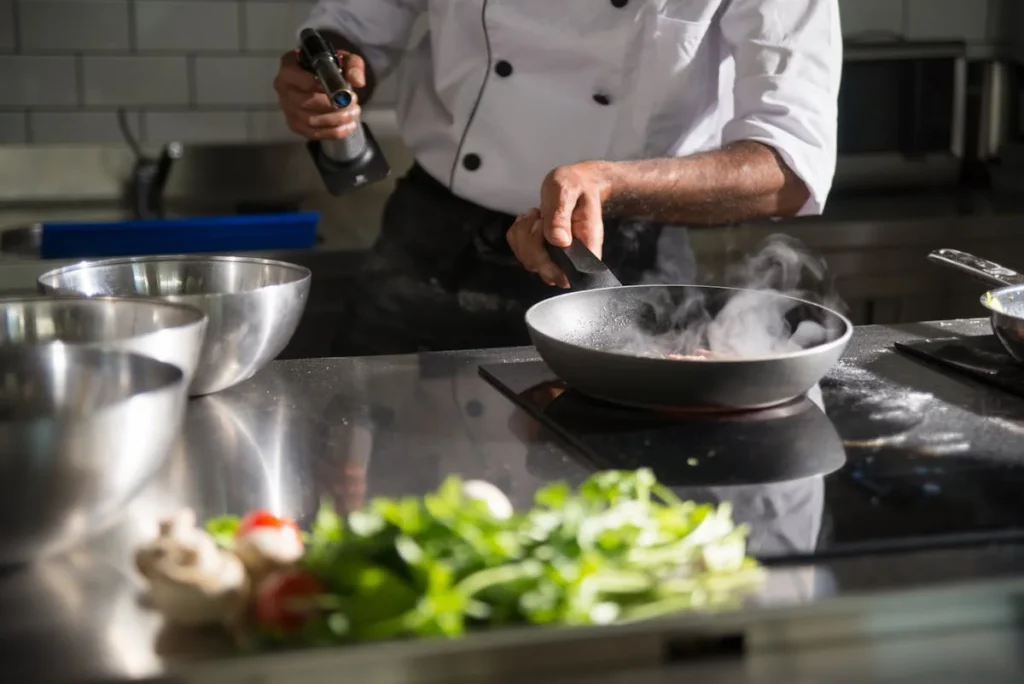
For many home cooks, replicating a dish from a favorite high-end restaurant can be a frustrating exercise. Even when following a published recipe from a famous chef, the final result at home often lacks the explosive flavor, velvety texture, or visual precision of the restaurant version. This discrepancy is not necessarily due to a lack of talent or cooking ability. Instead, it stems from a fundamental divergence in how home recipes and professional recipes are structured, written, and executed.
While home cooking focuses on comfort, simplicity, and flexibility, professional culinary production is built on the principles of industrial engineering, exact science, and strict cost management. Understanding the structural differences between these two styles of recipes reveals how professional kitchens achieve absolute consistency and how home cooks can use these professional insights to elevate their own culinary skills.
The Language of Measurement: Mass vs. Volume
The most glaring difference between a home recipe and a professional formula is the method used to quantify ingredients. This single factor represents the dividing line between casual cooking and scientific precision.
Volume Based Home Recipes
Standard home recipes in the United States rely heavily on volume measurements, such as teaspoons, tablespoons, cups, and fluid ounces. While volume cups are convenient and familiar, they are inherently inaccurate for measuring dry ingredients.
A cup of all-purpose flour can vary in weight by as much as thirty percent depending on whether the flour was scooped directly from the bag, sifted, or packed down by humidity. This variance can completely alter the chemical balance of a baking recipe, leading to inconsistent results.
Mass Based Professional Formulas
In professional kitchens and bakeries, recipes are rarely called recipes; they are referred to as formulas. These formulas completely abandon volume cups in favor of mass measurements, recording every ingredient in grams or ounces.
Weighing ingredients on a digital scale eliminates environmental variables and guarantees that the ratio of components remains identical whether a chef is making a single loaf of bread or five hundred loaves. For liquids, professionals also prefer weight or precise metric volume, recognizing that even liquid measurements can be misread in a standard glass measuring cup.
Scaling, Yields, and Baker Percentages
Home recipes are designed for static, small-scale production, whereas professional formulas are built to scale dynamically based on changing daily customer volumes.
Fixed Home Yields
A typical home recipe yields a fixed amount, usually four to six servings. If a home cook wants to double or triple the recipe for a party, they simply multiply all the ingredients by two or three.
However, mathematical scaling is rarely linear in cooking. Doubling the ingredients can often lead to an over-seasoned dish, an excess of cooking liquid, or a batter that does not bake correctly due to altered pan thermodynamics.
Dynamic Professional Scaling and Baker Percentages
Professional formulas are written to allow seamless, mathematically precise scaling. In commercial baking, this is achieved through Baker Percentages. In this system, the total weight of the flour in a recipe is always set at one hundred percent, and every other ingredient, such as water, yeast, salt, and fat, is expressed as a percentage of that flour weight.
This allows a pastry chef to instantly calculate the exact weight of ingredients needed based on the total amount of flour available or the specific target yield for the day, preserving the precise structural integrity of the food at any scale.
Equipment Capabilities and Kitchen Environments
A recipe is only as good as the environment in which it is executed. Professional recipes assume access to specialized, high-powered machinery that standard home kitchens simply do not possess.
Domestic Limitations
Home recipes are tailored to standard residential appliances. Residential ovens heat slowly and struggle to maintain a perfectly uniform temperature when the door is opened.
Home stovetops produce a fraction of the thermal energy found in commercial kitchens, meaning pans cool down rapidly when raw ingredients are added, often causing food to steam or stew rather than sear.
Commercial Advantages
Professional recipes are written with the assumption that the kitchen utilizes commercial-grade equipment. This includes:
- High-BTU Burners: Commercial gas ranges produce intense heat that allows for instant searing and rapid reduction of sauces.
- Combination Convection Ovens: These ovens use high-speed fans and integrated steam injection to cook food uniformly and create crisp crusts that are impossible to duplicate in a standard home oven.
- High-Speed Immersion Blenders and Food Processors: Commercial blenders operate at significantly higher revolutions per minute, pulverizing ingredients to create perfectly emulsified, silky purees and soups without any graininess.
Ingredient Composition, Prep Work, and Complexity
The philosophy behind ingredient selection and preparation differs immensely between a domestic kitchen and a commercial line.
Streamlined Home Convenience
Home recipes prioritize efficiency and minimizing dirty dishes. They often utilize shortcut ingredients, such as store-bought chicken broth, canned beans, or pre-made spice blends.
Steps are combined to save time, and the prep work is integrated into the cooking process itself to get dinner on the table quickly.
Layered Professional Complexity
Professional recipes are multi-layered and rarely self-contained. A single dish on a restaurant menu may actually require the execution of four or five separate sub-recipes prepared by different kitchen stations. For example, a professional steak recipe does not start with raw meat and a pan. It requires a pre-made veal demi-glace that took twenty-four hours to simmer, an infused herb butter, a precisely seasoned brine, and a micro-green garnish sourced from a specialty vendor.
Furthermore, professional recipes rely heavily on pure fats and acids, utilizing significantly more butter, heavy cream, kosher salt, and specialized vinegars than a home cook would feel comfortable using on a daily basis. This layering of components, fats, and acids is what creates the deep, complex flavor profiles associated with restaurant dining.
Frequently Asked Questions
Why do professional recipes often specify kosher salt rather than standard table salt?
Professional kitchens prefer kosher salt because its larger, coarser flakes make it much easier to pinch and distribute evenly by hand, giving chefs precise tactile control over seasoning. Additionally, table salt contains anti-caking agents and iodine, which can introduce a subtle metallic flavor to delicate dishes. Table salt is also twice as dense as kosher salt, meaning substituting them cup-for-cup without weighing can make a dish twice as salty as intended.
What does the term mise en place mean in professional recipe execution?
Mise en place is a French culinary term that translates to everything in its place. In professional cooking, a chef never ignites a burner until every ingredient is completely washed, peeled, chopped, weighed, and organized into individual containers within arm’s reach. This organization ensures that the actual cooking process is continuous and controlled, preventing ingredients from burning or overcooking while a cook scrambles to chop the next item.
Can I convert a home recipe into a professional formula successfully?
Yes, you can convert a home recipe by translating all volume measurements into mass measurements using a digital kitchen scale. Cook the recipe using your standard volume cups one final time, but weigh each ingredient in grams as you add it to the bowl. Record these weights to create a precise master formula that can be scaled up or down mathematically without losing the original flavor balance.
Why do restaurant sauces have a glossy, thick texture that is hard to achieve at home?
The glossy texture of professional sauces is achieved through a technique called monter au beurre, which means lifting with butter. At the very end of the cooking process, chefs swirl cold, unsalted butter into a hot, reduced liquid off the heat. The rapid swirling emulsifies the milk solids and fats into the sauce before they can melt completely, creating a rich, mirror-like sheen and a smooth mouthfeel that starches cannot replicate.
How do professional recipes manage food waste compared to home recipes?
Professional recipes are designed with cross-utilization and yield management in mind to maintain restaurant profitability. While a home recipe might call for using only the white parts of leeks and discarding the green tops, a professional formula will dictate using the green tops for a vegetable stock or an infused oil. Commercial recipes account for the exact trim loss of proteins and vegetables to ensure that every ounce of raw material is either served or repurposed.
Why do professional baking recipes use percentages that add up to more than one hundred percent?
Professional baking formulas use Baker Percentages, where the total weight of the flour is always established as the baseline of one hundred percent. If a bread formula calls for seventy grams of water for every one hundred grams of flour, the water content is recorded as seventy percent. When you add the percentages of yeast, salt, and water together, the total will naturally exceed one hundred percent, allowing for simple scaling based entirely on the amount of flour used.
 What Exactly Are Low-calorie Recipes To Lose Weight In Your Own Home?
  Reduced Carb High Protein Recipes
  Healthy Snacks Recipes permanently Health
  Feast around the Tastiest Chili Recipes
  Dieters Recipes With Points
  Good sandwiches near me and where to find quality lunch options
  Gym Singapore Nutrition Habits That Support Better Training and Recovery
  How Smart Food Choices Improve Energy Before and After Yoga Practice
  The Role of Innovation in the Modern Restaurant Industry